What is an American option?
An option is an agreement between its seller and buyer, as a result of which the buyer is given the right to purchase (call option) or sell (put option) the underlying asset. The price is agreed in advance and remains unchanged throughout the entire term. American and European option models are distinguished. The American option is widely used today.
How does an American option differ from a European one?
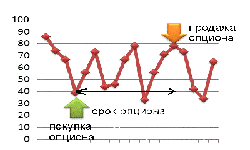
In option transactions there is such a concept as expiration, that is, the exercise of the right acquired by the buyer together with the contract. It can be early or timely.
Timely expiration is most often called exercise. It occurs at the moment the contract term ends, but if the buyer decides not to use their right, the option simply “expires worthless”.
Early expiration can occur at any moment during the contract term, even the day after it is concluded. The right to early expiration must be agreed upon in advance.
An American option differs from a European one in that it gives its holder the right to demand execution of the contract at any moment during its term.
A European option can be exercised only at the specified time.
In what cases are American options advantageous?
Experienced traders use the right of early expiration not as often as it may seem at first glance. In the case of a call option, expiration is used only in two cases:
1) The asset price has reached its maximum point and will only decline further. This also applies to put options.
2) The dividend payment date for shares that may be the underlying asset of the contract is approaching.
In all other cases, traders prefer to wait until expiration. Such tactics make it possible to accumulate the required amount to buy out the asset or to redirect already available funds to another area where a certain profit can also be obtained.
It turns out that the right provided by an American option is used extremely rarely, but despite this it still remains the most in demand.
When acquiring a security, an investor cannot know in advance that force majeure situations will not occur during its term, during which it will be necessary to convert the option. That is why traders prefer to insure themselves and purchase an American-style contract, especially since in all other parameters it does not differ from a European one.
Example of using an American option
A trader purchases an American call option to buy shares of a well-known company at the price valid at the moment.
Strike price — 1,000 rubles per share.
Contract term — 1 month.
Asset volume — up to 500 shares.
Option premium — 6% of the investment amount, that is: 1,000 rubles * 500 shares * 6% = 30,000 rubles.
There is a trend of slow growth in the share price on the market. The trader expects that during the allotted period the shares will increase in price by more than 10%, and he will be able to make a profit from their resale.
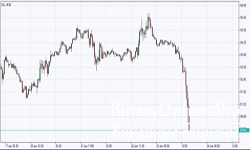
Two weeks before the expiration date of the option, the share price stops at 1,090 rubles and remains unchanged for several days. Then it sharply falls to 1,070 rubles. Analysts predict a further decline, as the company has encountered certain financial problems.
In order for the trader to obtain at least some profit, it is necessary to use early expiration. He buys the shares from the option seller at a price of 1,000 rubles and immediately sells them for 1,070. Taking into account the option premium, his profit will amount to only: 1,070 rubles (exercise price) − 1,000 rubles (strike price) * 500 shares − 30,000 rubles (premium) = 5,000 rubles.
If he does not use early expiration, exercising the option would lose its meaning, and the loss would already amount to 30,000 rubles, that is, the size of the premium, which in any case remains with the seller.