Options expiration — what is it?
If we answer the question of what options expiration is in simple terms, this term refers to the moment when this security ceases to be valid. At this time, the holder must decide whether to exercise the right to buy or sell the agreed asset at a fixed price or simply let the contract expire.
Execution time and early expiration
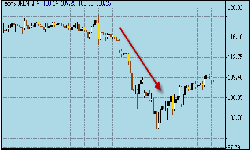 Timely expiration is called the execution time, and the period from the beginning of the contract to its end is called the term of execution. The term “expiration” itself is more often used to denote early exercise of a security. In this case, the seller is obliged to immediately fulfill the obligation or compensate the buyer for the full amount of income that could have been received from selling the asset.
Long-term expiration is quite risky for both the seller and the buyer. That is why experienced stock market participants, for whom buying and selling securities is the main source of income, in most cases try to avoid early exercise. However, in some situations, this measure may be the only way to avoid major financial losses.
Why is early expiration of call options usually unprofitable?
Options are divided into two types: call and put. A call gives its holder the right to buy an asset, a put — to sell it. Such different purposes explain the differences in what call and put option expiration means and what consequences it may have.
When studying what call options are, one may get the impression that they are most often exercised before the set date.
Calls are purchased to secure the right to buy a certain asset in the future at the current price. The investor seeks profit from price fluctuations. It would seem that when the price rises, it is better to convert the security immediately and receive income. In practice, experienced traders do this very rarely for the following reasons:
1) During the option term, the risk of large financial losses is minimal.
At the moment when the trader exchanges the security for the asset, he will not receive the desired profit immediately. First, he needs to find a buyer, and during this time the market situation may change, for example, the asset may fall in price. Then the whole point of buying and selling securities is lost. Taking the option premium into account, the investor may even incur losses. Therefore, it is much better to wait until expiration and prepare the “ground” for selling the asset.
2) Accumulating funds to purchase the asset.
Most often, the contract is concluded when the investor does not yet have the required amount to buy the asset. For example, a trader learns that in a couple of weeks the price of a company’s shares will rise significantly from 100 to 150 rubles. By buying more than 1,000 shares now, he can make a profit of 150,000 rubles in the future, but for this he needs to invest 100,000. He does not have such an amount, and even if he did, buying the asset is too risky. It is much better to buy a call option and find the required amount by the time of expiration. As a result, the investor gets significant profit without unnecessary risks and expenses. The only drawback is that paying the premium reduces possible profit.
 3) Preserving funds that could have been spent on purchasing the asset.
When concluding an option contract, the buyer has a guarantee that he will receive the asset in any case, regardless of how its price changes. This means that until expiration, the funds prepared for purchasing the underlying asset can be put into circulation. This is what experienced investors most often do: for them, money becomes not just banknotes, but a tool for generating ever greater profits.
Early expiration of options is useful under only one condition — when dividend payment dates are approaching. This applies only to exchange-traded options whose main underlying assets are shares. As you remember from introductory economics lessons, shareholders receive dividends at a designated time — a portion of company profits in proportion to the number of shares owned. By exchanging the contract for shares at this moment, the investor receives dividends and can still sell the shares later, earning even more profit.
In what cases may early expiration of put options be necessary?
When concluding a put option, the asset is held by the security holder, and the seller undertakes to buy it at the established price. Most often, investors use this to insure their investments.
In the case of a put contract, early expiration is also unprofitable, especially for the seller. An approaching dividend payment date, on the contrary, becomes a reason not to demand early exercise.
Put option expiration is necessary only when the asset price has reached its maximum point and is expected to decline in the near future, while the contract term has not yet expired. By waiting until expiration, the investor will lose profit every day, although he could have received it in full.
Risks and losses of the option seller with long-term expiration
Regardless of the reasons and timing, expiration is always unprofitable for the seller. His income depends on the premium — the option price paid by the buyer at the beginning of the deal. The seller always expects that the security holder will never use it.
Any expiration means financial losses. The seller will have to spend funds on purchasing the asset or compensating the difference between the strike and market price.
Such expenses are prepared for in advance. Until the end of the option term, neither party can be sure that the “bet” will work in its favor, so by the end of the contract everyone prepares for the worst. The seller sets aside reserve funds to cover possible expenses. If expiration occurs early, he may not be ready for such an outcome and simply lack the necessary funds.
Expiration of binary options
Binary options differ greatly from the traditional understanding of this term. This difference appears in all parameters of the financial instrument, including expiration.
A binary option is an option whose execution depends on whether the investor correctly predicts an increase or decrease in the price of the underlying asset. One of the reasons for the popularity of this market is the ability to make quick profits. The expiration period usually does not exceed one month and most often lasts only a few hours.
Types of binary options depending on expiration
 Depending on the expiration term, such securities can be divided into short-term and long-term.
Short-term options
Very popular among those seeking easy and quick profits. Short-term contracts are those whose execution period does not exceed one hour. Binary options “60 seconds,” where one must predict price behavior within the next minute, are very common.
Long-term options
Options with a minimal execution period can bring quick profits, but they are quite risky. Predicting price movements in the near future is extremely difficult. However, it is possible to analyze asset behavior over the last quarter and make a forecast for the next few weeks or a month.
Long-term options are favored by experienced traders, for whom trading is not just entertainment but a full-fledged source of income.
Extending the expiration period of binary options
Some brokers allow their traders to extend the expiration period. Many users actively use this option, for example, when an investor is confident in the correct outcome of a trade but misjudged the timing.
The broker charges an additional fee of about 40% of the bet for extending expiration.
Given the fairly high cost, an extended binary option rarely brings significant profit; it can only compensate for losses that would have been incurred if the option had failed.
It should be noted that changing the expiration period is only possible in the direction of extension. Allowing traders to demand early exercise is too risky. Binary options are a very simple type of bet: the investor only needs to predict whether the asset price will rise or fall. In long-term investing, early expiration could even bankrupt a broker, as the price may rise and fall an unlimited number of times during the reporting period.